Preparing India’s Soybean Sector for a Changing Climate in Madhya Pradesh
When Climate Reshaped an Entire Value Chain
Assessing Climate Adaptation Across India’s Soybean Sector in Madhya Pradesh & Maharashtra (2016)
Soybean is one of India’s most important agricultural commodities, supporting the livelihoods of millions of farmers while feeding an extensive network of traders, processors and industries. Yet, behind this thriving value chain lies a growing uncertainty. As temperatures rise, monsoons become increasingly erratic and extreme weather events grow more frequent, every link in the soybean economy is being forced to adapt. Commissioned by MART and Solidaridad, TAAL undertook a comprehensive value chain assessment in 2016 to understand how climate change was reshaping soybean production and what would be needed to secure the future of one of India’s most significant crops.
The Problem
For more than six million soybean farmers, the arrival of the monsoon is more than a weather event—it determines when seeds are sown, how crops grow and whether a season will end in profit or loss. But across the major soybean-growing regions of Madhya Pradesh and Maharashtra, that rhythm had begun to change.
Rainfall was arriving later, dry spells were becoming longer, temperatures were steadily increasing and intense rainfall events were replacing predictable monsoon patterns. Farmers responded by changing seed varieties, altering sowing schedules and increasing the use of fertilisers and pesticides, yet every adaptation seemed to create a new challenge.
Higher temperatures encouraged pests and diseases, soils lost moisture more quickly, cultivation costs continued to rise and crop yields became increasingly uncertain. The impact was no longer confined to the farm—it was beginning to affect every stage of the soybean value chain, from input suppliers and traders to processors and markets.
Our Approach
Recognising that climate risks extended far beyond agricultural fields, TAAL examined the soybean sector as a connected system rather than a collection of individual farms.
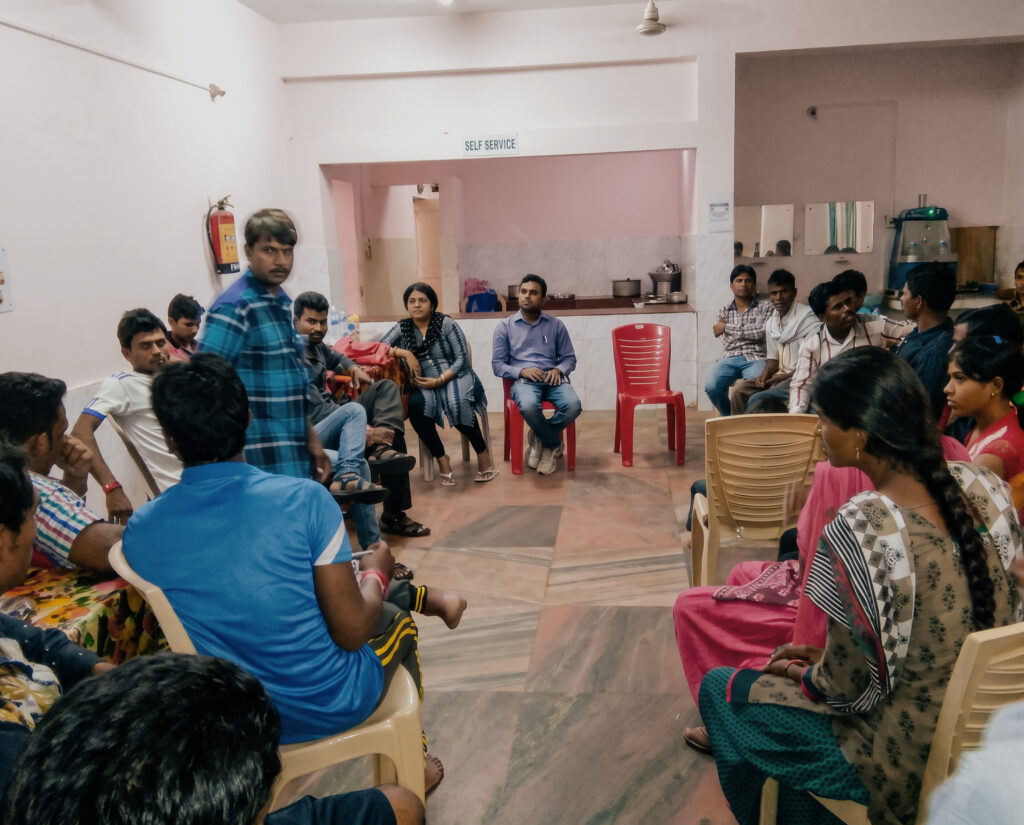
The study covered six districts across Madhya Pradesh and Maharashtra, bringing together farmers, input suppliers, traders, processors, government agencies, researchers and financial institutions. Through field visits, focus group discussions and stakeholder interviews, it mapped the journey of soybean from seed to processing, identifying where climate-related risks emerged and how different actors were responding to them.
Scientific analysis of long-term temperature and rainfall trends was combined with on-ground experiences to understand how changing weather patterns were influencing farming decisions, input use, productivity, processing and market dynamics. The assessment also explored existing policies, financial mechanisms and institutional support systems, revealing not only how different stakeholders were adapting, but also where critical gaps continued to leave the sector vulnerable.
The Outcome
The assessment demonstrated that climate adaptation could not be addressed by farmers alone. Building resilience required coordinated action across the entire soybean value chain—from developing climate-resilient farming practices and improving water-use efficiency to strengthening producer-processor partnerships, expanding climate finance and creating better systems for sharing knowledge and risk.
More importantly, the study shifted the conversation from protecting soybean yields to safeguarding an entire agricultural economy. By identifying vulnerabilities across production, processing and markets, it provided a practical roadmap for helping millions of farmers and industry stakeholders prepare for a future where climate uncertainty is no longer the exception, but the new reality.