Enabling Vulnerable Families to Rebuild Livelihoods after COVID-19 in Bhopal
Supporting Women, Persons with Disabilities and Vulnerable Families to Reclaim Livelihoods after the Second Wave of COVID-19 in Bhopal (2021–2022)
Before the pandemic, many families had found a way to make ends meet through tailoring, tea stalls, beauty parlours, grocery shops, catering or small home-based businesses. Then came the second wave of COVID-19. Livelihoods disappeared almost overnight, savings were exhausted and, for many households, survival itself became uncertain. Through the Atmanirbhar (Self-Reliance) Programme, TAAL worked with vulnerable families not simply to recover what was lost, but to help them rebuild livelihoods with renewed confidence and dignity.
The Problem
The second wave of COVID-19 left behind more than a public health crisis. Across Bhopal, widows, single women, persons with disabilities and low-income families found themselves struggling to cope with the loss of jobs, businesses and, in many cases, their primary earning member.
Small enterprises that had taken years to establish were forced to shut down, while others sold their equipment or business stock simply to buy food and meet daily expenses.
As markets slowly reopened, many still possessed the skills to earn—but lacked the resources to begin again. A beautician had no money to buy equipment. A tailor no longer had a working sewing machine. A grocery shop stood empty because there was nothing left to stock its shelves. The challenge was no longer finding work—it was finding a way to restart.
Our Approach
Rather than relying on assumptions, TAAL went to the source. Field teams visited homes, understood each household’s circumstances and looked beyond immediate hardship to identify existing skills, experience and opportunities. The conversations often revolved around a simple question:
“What do you already know how to do?”
The answers shaped the support that followed. A tailor expanded her sewing unit. A widow restarted her sari business from home. A beauty parlour owner stocked her shelves and reopened her shop. Tea stalls, grocery stores, tiffin services, vegetable carts, cosmetic shops and tailoring centres all emerged from plans designed around each beneficiary’s strengths rather than their struggles.
Financial support was provided in phased instalments, allowing businesses to grow steadily while regular mentoring, follow-up visits and practical guidance helped families navigate the uncertain months that followed. In several cases, support extended beyond livelihoods to immediate needs such as food security or ensuring children could continue their education, recognising that rebuilding lives often meant addressing more than income alone.
The Outcome
Across Bhopal, small enterprises gradually came back to life. Tailoring units expanded into boutiques, tea stalls found regular customers, grocery and cosmetic shops restocked their shelves, beauty parlours reopened and home-based businesses once again became reliable sources of income. Some entrepreneurs went a step further—employing neighbours, involving family members in their businesses or investing their profits to expand further. Businesses that had almost disappeared during the pandemic slowly regained both customers and confidence.
Yet the most meaningful change was seen inside the households themselves.
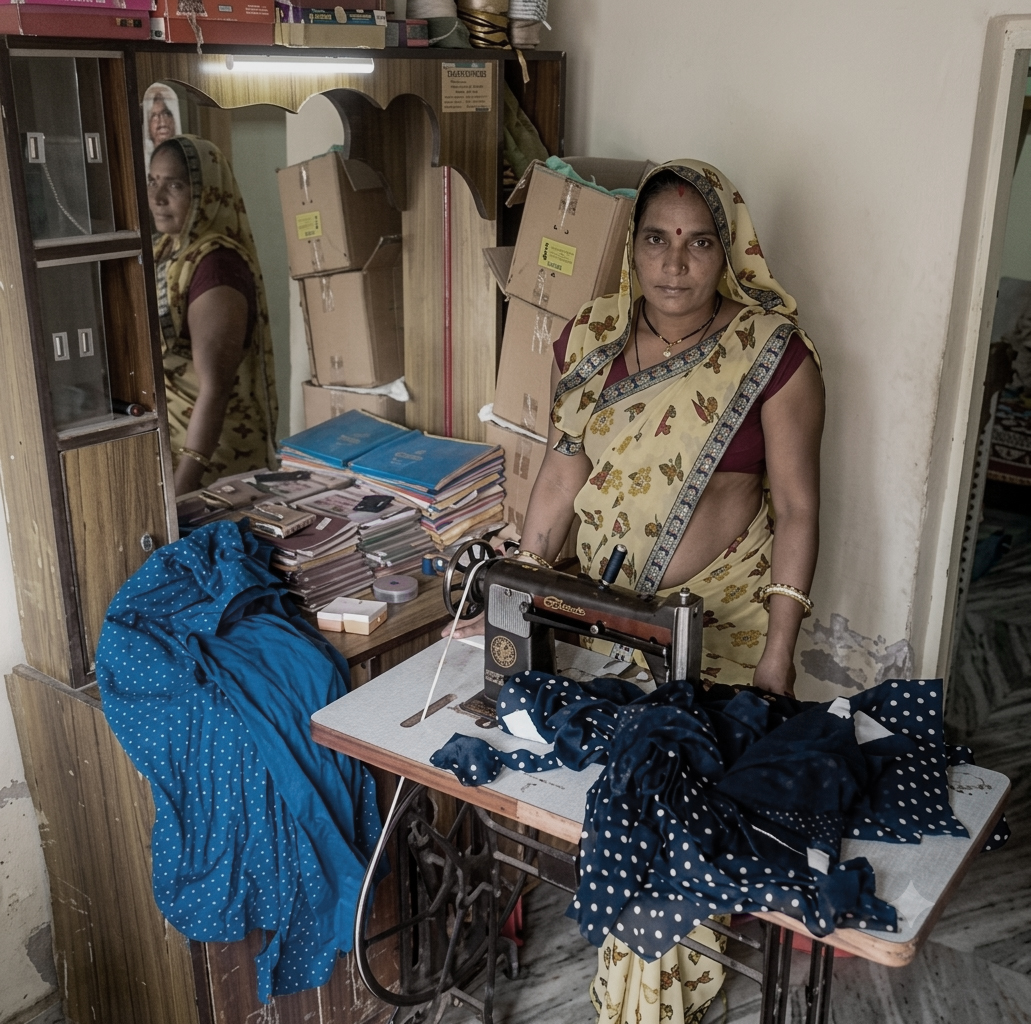
Families who had feared losing everything began planning for the future again. Children stayed in school, debts slowly reduced and women who had once depended entirely on others became entrepreneurs supporting not only themselves but also their families and communities. The Atmanirbhar Programme showed that recovery is not simply about restoring income—it is about restoring the confidence to begin again, even after life’s most difficult setbacks.