Improving Water Problem Irrigation Equity in the Tawa Command Area, Madhya Pradesh
Understanding Water Governance and Equitable Irrigation in the Tawa Command Area, Madhya Pradesh (2008–2010)
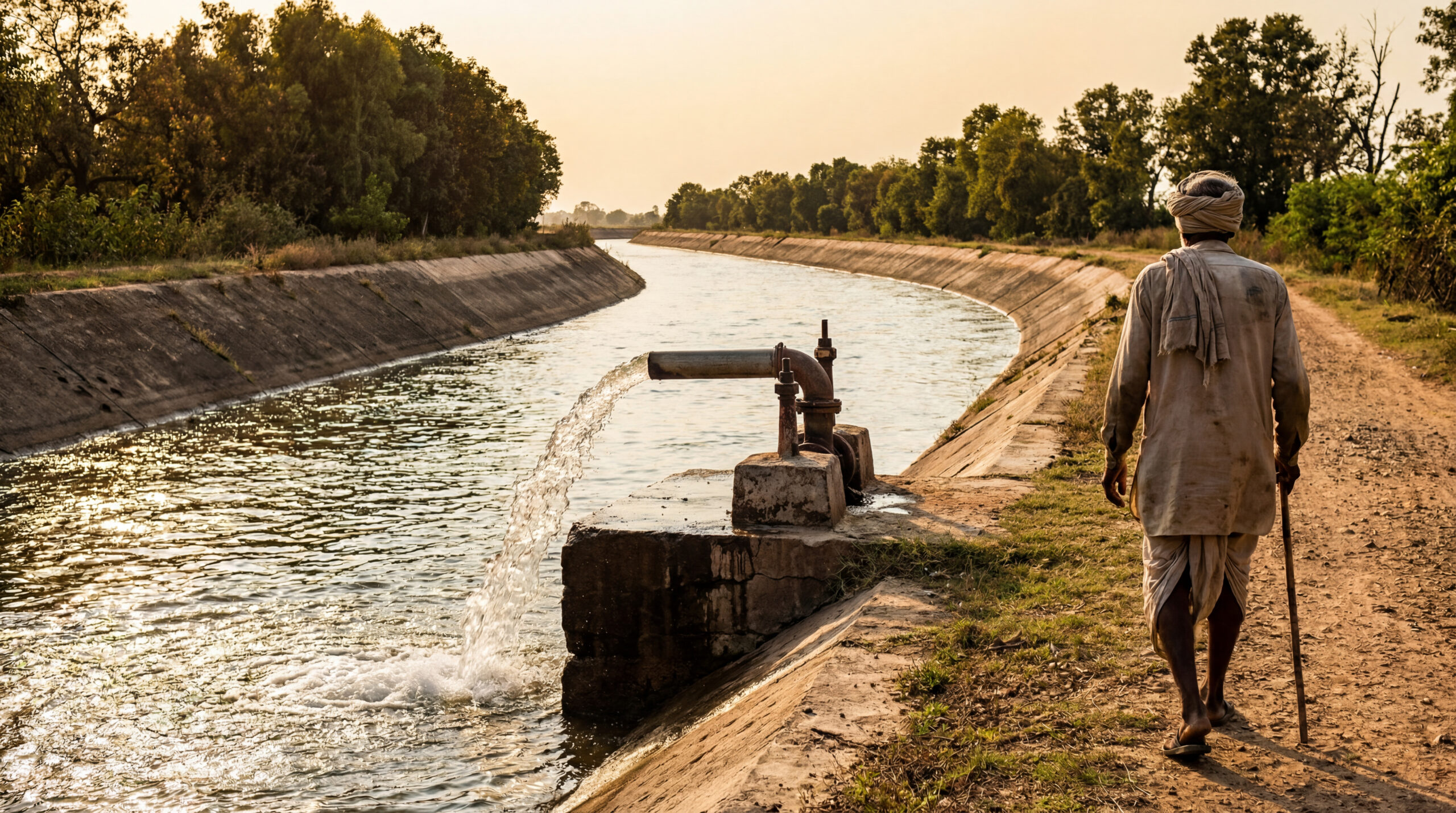
Water flowing through a canal does not always reach every farmer equally. In the Tawa irrigation system, fields at the head of the canal often received timely irrigation, while those further downstream waited for water that sometimes never arrived. Supported by the Society for Promotion of Wasteland Development (SPWD), TAAL undertook an in-depth study of the Tawa Irrigation System—not to examine engineering alone, but to understand how governance, institutions and decision-making influenced who ultimately received water, and who was left behind.
The Problem
Irrigation is often seen as a question of infrastructure, but the real challenge begins after the water enters the canal. Across the Tawa command area, farmers shared a common concern: despite an extensive irrigation network and the existence of Water User Associations (WUAs), access to water remained unequal. Tail-end farmers routinely received less water than those upstream, illegal outlets diverted canal flows, maintenance was inconsistent, and decisions about water distribution lacked transparency. Many institutions created to enable participatory irrigation existed largely on paper, while the coordination needed between departments and
farmer organisations rarely translated into practice.
The result was more than an irrigation problem. It was a governance challenge, where policies, institutions and accountability often determined whether crops survived as much as rainfall or reservoir levels.
Our Approach
Rather than studying canals from maps or government records alone, TAAL went to the people who depended on them every season.
The study brought together farmers, Water User Association members and officials from the Water Resources and Agriculture Departments to understand how irrigation actually functioned on the ground. Field visits followed water from the head reaches to the tail ends of distributaries, documenting where it slowed, where it disappeared and why. Discussions explored how irrigation schedules were prepared, how decisions were communicated, whether farmers trusted the system, and how responsibilities were shared between institutions.
As the conversations deepened, a larger picture began to emerge. Water measurement systems were often non-functional, agreements with farmers did not reflect actual irrigation practices, many Water User Associations lacked the capacity to perform their intended roles, and poor coordination between departments weakened participatory irrigation management. The study also examined cropping patterns, maintenance funding, staffing gaps and institutional processes, recognising that equitable irrigation depends as much on governance as it does on engineering.
The Outcome
The study demonstrated that improving irrigation required more than repairing canals—it required strengthening the institutions responsible for managing them. It recommended clearer roles for government departments, stronger and better-supported Water User Associations, reliable data systems, transparent budgeting, measurable service standards and timely operational support so that participatory irrigation management could function as it was originally intended.
More importantly, the study shifted the conversation from water availability to water governance. It showed that the true measure of an irrigation system is not how much water it stores, but how fairly, transparently and effectively that water reaches every farmer. By placing governance at the heart of irrigation, the study offered a practical roadmap for creating systems that are not only technically efficient, but also equitable, accountable and farmer-centred.